Have you ever wondered how some businesses always seem to have the perfect price for their
products?
Of course, it’s not a random guess, price monitoring is
the secret behind!
Well, if you think only large businesses can afford that, think again. With a variety of tools available, the cost of price monitoring varies to fit the different needs and scales of each business.
What is Price Monitoring?
Price Monitoring is the process of regularly tracking and analyzing the prices of products or
services—both yours and your competitors’ across multiple platforms. This helps you understand
the market trends and competitor pricing strategies and find the optimal price for your
products.
The goal?—To stay ahead in the market by ensuring you’re always offering the best possible price
for your products.
Why does it matter?
Pricing plays a major role in influencing the customer’s decision to buy. You know what? A small
change in price—either up or down—could make a huge difference!
Price monitoring is important because it
Ensures you stay competitive in the market.
Helps Maximize profitability by finding the optimal price.
Enables you to quickly adapt to market fluctuations.
Prevents Overpricing or Underpricing, attracting more customers.
Helps you make informed decisions with data-driven insights.
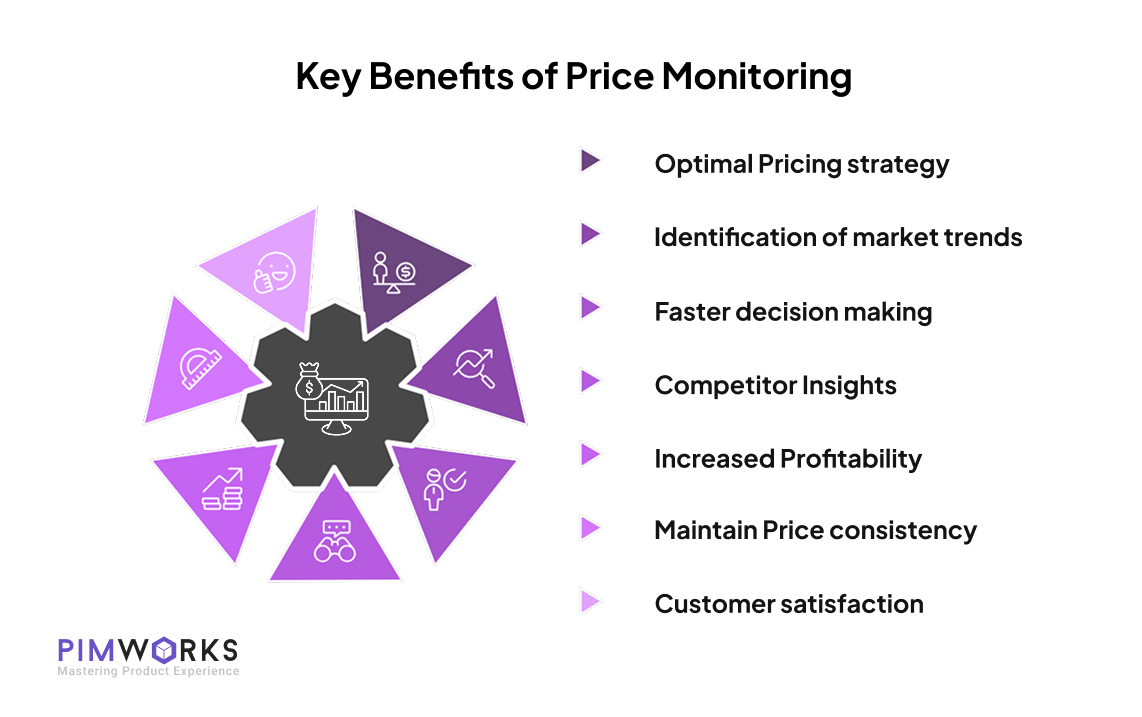
Key Benefits of Price
Monitoring
Price Monitoring offers numerous advantages that help businesses stay competitive and profitable
in today’s market. Here are some of the key benefits:
Optimal Pricing strategy
Setting the right price isn’t always easy. Pricing a little high would affect your sales, and
pricing a little low will hit your margin. Price monitoring helps you find the right balance by
analyzing competitor shifts and trends. You know what I mean?
It’s all about finding the sweet spot—a price where you can make more sales without losing your
margin!
Identification of market trends
Blink—and you might miss it! Yes, the market moves so fast.
Prices can fluctuate due to a number of factors such as demand, competition, or more. By
monitoring the prices, you can quickly identify the trend in the market and stay updated.
Faster decision making
We all know that Time is money. And, that proves true here—a fraction of a second could make or
break your profits. Whether you need to lower your price or increase it, with access to
real-time data, you can make the most crucial decisions quickly, backed by data. No more
guesswork!
Competitor Insights
Let’s be honest, keeping track of your competition is very much important in today’s scenario.
Monitoring your competitors would help you gain insights into their pricing strategies,
promotions, and market positioning. This allows you to spot the gaps and identify opportunities
to stand out. By this way, you can increase your digital share of shelf and gain a competitive edge
in the market. Always stay one step ahead!
Increased Profitability
By regularly tracking your competitors’ prices and market trends, you could find the optimal
price for your product. Setting the right price means maximizing your margin while staying
attractive to the customers.
Why leave money on the table?
Maintain Price consistency
Selling on multiple platforms like Amazon, Walmart, or your website?—maintaining price
consistency is super important. Inconsistent pricing could confuse the customers and damage
trust. Price monitoring helps you ensure your prices are consistent everywhere, protecting your
brand integrity.
Customer satisfaction
When customers believe they are getting a great deal for what they are paying, they feel valued.
Fair and consistent pricing builds trust and loyalty for your brand.
As you know, Happy customers are more likely to return!
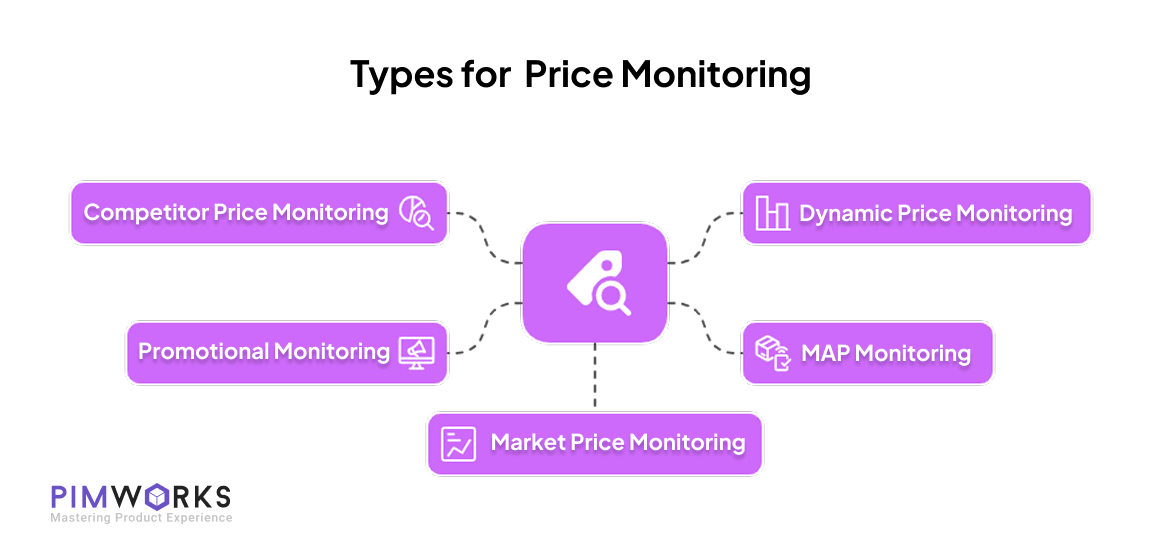
Types of Price Monitoring
Here’s a breakdown of the major types of Price monitoring that can help you make informed
decisions and stay ahead in the market. Let’s dive in!
Competitor Price Monitoring
As the name suggests, Competitor Price Monitoring involves monitoring the prices of your
competitors. By doing so, you could remain competitive by gaining insights into their pricing
strategies and adjusting yours accordingly. Maintain your competitive edge!
Dynamic Price Monitoring
Dynamic Price Monitoring involves tracking and adjusting of prices in real time based on demand,
inventory levels, or competition. This is most commonly used in industries where prices
fluctuate frequently, like in eCommerce or travel.
MAP Monitoring
MAP (Minimum Advertised Price) Monitoring is all about ensuring that your resellers comply with
your brand’s MAP policies. This helps prevent slashing of prices by the retailers, protecting
your Brand Integrity.
Promotional Monitoring
Promotional Monitoring involves tracking special offers or discounts offered by your
competitors. It helps you understand the impact of your competitors’ promotions and adjust your
promotional strategy accordingly. It’s stealing their spotlight!
Market Price Monitoring
Market Price Monitoring involves tracking of the overall market trends, including pricing
patterns across different markets and customer segments. It helps you ensure that your prices
are are just right – not too high, not too low compared to the market trends and identify
opportunities for growth.
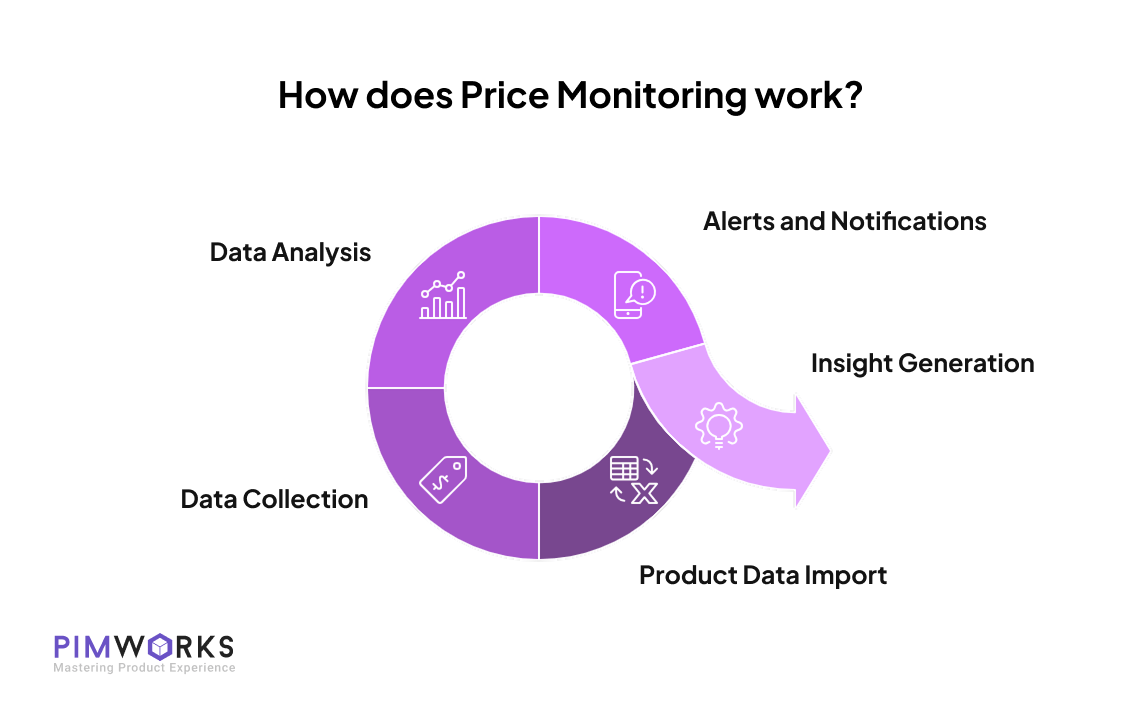
How Does Price Monitoring Work?
Well, how actually price monitoring work? Let me explain.
Product Data Import
You could begin by uploading your product data to the system—usually in either CSV or XLS
formats. This includes details like product names, SKU IDs,
categories, and so on. Once everything’s imported, you’ll have to match your products with
competitor listings so you can compare your prices.
Data Collection
The process begins with collecting the prices from all the channels where you’ve listed your
products. Price monitoring tools utilize APIs or web
scraping techniques to automatically collect the data at regular intervals. So you are always in
the loop—no surprises!
Data Analysis
Once the data is in, you can analyze competitor pricing and fluctuations over the period of
time. This will help you understand the market trends by identifying underlying patterns.
Alerts and Notifications
Price monitoring tools send you real-time alerts whenever your competitors adjust their prices
or when your prices start lagging behind. This means that you could respond swiftly to the
changes in the market and remain competitive. Really handy, isn’t it?
Insight Generation
The best part is right here! By analyzing the reports, you could find chances to refine your
pricing and identify gaps in competitors’ offerings. The insights gathered will empower you to
stay ahead of the competition and maximize your profitability.
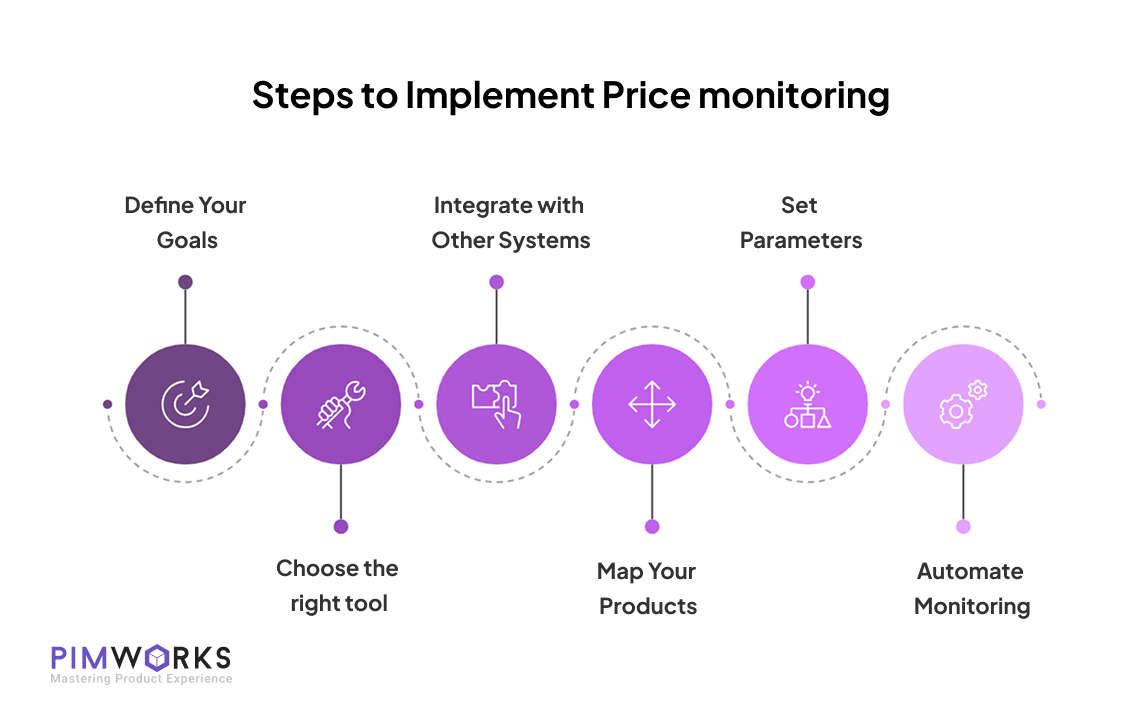
How to Implement Price
Monitoring?
Implementing price monitoring is easier than you think but with a strategic approach. Here’s a
step-by-step guide:
Define Your Goals
First, get clear on what you want to achieve. Are you aiming to stay competitive, maximize
profits, or identify market trends? Defining your goals right at the start will help you keep on
track throughout your journey.
Choose the right tool
Next, you need to pick a price monitoring tool that suits you. There are plenty of options
available in the market. Look for features like real-time tracking, customizable alerts, and
user-friendly dashboards as per your needs. Don’t forget to evaluate if the tool could scale
with your business and easily integrate with your existing tech stack. Trust me, the right tool
makes all the difference!
Let’s break down the types of tools in the following section, to help you make the right
choice.
Integrate with Other Systems
Connect your price monitoring tool with your existing systems —whether it’s your ERP, PIM, or e-commerce platforms. This creates a seamless
workflow enabling more coordinated decision-making. Whether inventory planning or marketing
decisions—make it with confidence and data-driven.
Map Your Products
Before you start tracking, you need to map your products with that of your competitors’
listings. This is crucial to compare the right items and get accurate data. Identify your main
competitors and focus on the ones whose price will impact you the most.
Set Parameters
At this step, you need to define your strategy for price monitoring. Decide on what products to
monitor, which competitors to track, frequency of data collection, and so on. Also, define the
threshold limit for acceptable price differences to trigger alerts and adjust your strategy in
real-time.
Automate Monitoring
With everything set, it’s time to automate your flow. Configure your system to automatically
collect the data at specified times. This will save you a lot of time and ensure you always have
the latest insights, helping you make smarter decisions faster.
Choosing the Right tool
There are so many solutions available in the market to monitor product pricing. Choosing the
right tool depends on your business needs and what you want to achieve.
Here’s a quick breakdown:
Price Tracking tool
If your ideal goal is to keep an eye on your competitor’s prices and track changes over time, a
simple price monitoring tool would be enough. This would be perfect if you don’t need any
additional features other than price tracking.
Repricing Tool
If you are selling on multiple marketplaces like Amazon or eBay and want to quickly react to the
price changes, a repricing tool would be a great fit. It automatically adjusts your prices based
on the rules you set, eliminating the need for constant manual updates.
Digital Shelf Analytics Software
You could choose a Digital Shelf Analytics tool
like DigiSense if you want a full picture of your product’s
online presence. It helps you track not just prices, but also search visibility, content compliance, stock
availability, and customer sentiment across
the channels. You’ll get a complete understanding of your product’s performance and positioning
by monitoring your digital shelf.
PIM Software
If you are looking for a complete control over your product data and performance, PIM (Product Information Management) system would be the ideal solution. You
can manage and syndicate all your product
data across all your sales channels, enrich
content, monitor pricing, and track performance—all in one place.
As I said before, the best tool depends on how much control and insights you want. Choose wise!
Challenges in Price Monitoring
Price monitoring is not so simple as just tracking numbers, it has its own set of
challenges.
Here are the most common challenges with monitoring the prices:
Prices change in a blink of an eye, making it hard to maintain data accuracy.
Legal and ethical restrictions of web scraping might limit access to competitor data.
Differences in product names and descriptions make accurate product matching difficult.
Determining the right frequency to monitor prices is tricky—too frequent causes data
overload and too less leads to missing key changes.
Currency fluctuations might create discrepancies in the prices across regions.
Best Practices for
Effective Price Monitoring
You can do nothing with just the best tool. To make the most out of price monitoring, you should
have the right approach.
Here are some best practices to fine-tune your approach:
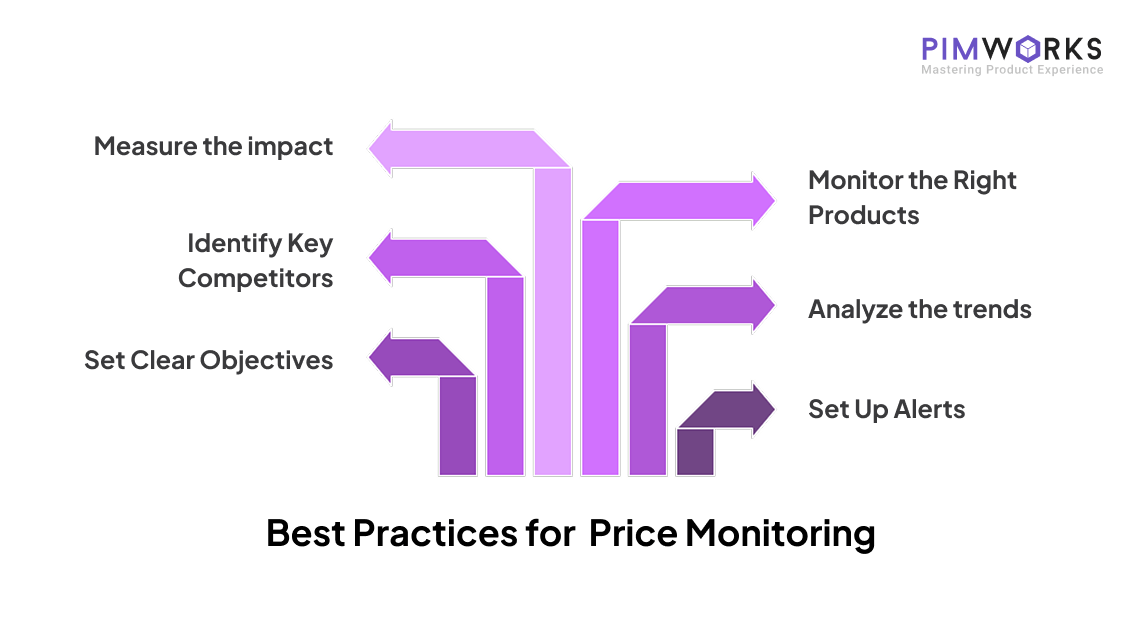
Best Practices for Price Monitoring include:
1. Set Clear Objectives
2. Identify Key Competitors
3. Measure the impact
4. Monitor the Right Products
5. Analyze the trends
6. Set Up Alerts
Set Clear Objectives
Don’t just track the prices for sake. Before starting to monitor prices, define your goals
clearly. What exactly are you looking to achieve? This will help you focus on the metrics that
matter the most to you.
Identify Key Competitors
Not every competitor’s price will affect your business. So, just focus on the ones whose pricing
will greatly influence your target audience. Who do your customers compare you with?
Monitor the Right Products
Give most of your focus to the products that matter the most—your best sellers, ones that bring
more profit, or those that are highly price sensitive. Don’t waste your time monitoring every
single product if not necessary. That makes sense, doesn’t it?
Set Up Alerts
Don’t Set-up alerts for everything, only do it for meaningful changes. Define the threshold
properly and get notified only when action is required. Don’t drown in notifications!
Analyze the trends
Prices change for a reason. Don’t just keep looking on the numbers, look for patterns—are prices
dropping before holidays? Are your competitors adjusting their prices at a certain time? Spot
the “Why” behind changes. Understanding these trends will help you anticipate things, not just
react to them.
Measure the impact
Monitoring pricing is not the end goal, it’s all about optimizing the performance. Regularly
analyze how the price changes impact your business by looking at the key eCommerce metrics. Did a small price drop bring
you more sales? Or it’s just a loss in your profit? Use these insights to fine-tune your
strategy in the long run.
Final Thoughts
Price monitoring isn’t just for the big giants; it is
a must for any business looking to stay ahead in the market. It’s a simple yet powerful way to
keep your prices competitive and optimal. By regularly monitoring and adjusting your prices
based on real-time competitor data, you could find the perfect balance between driving sales and
maintaining profitability.
Yes, prices fluctuate so fast and the idea of regular monitoring can seem overwhelming. But with
the right tools and implementing the best practices, the challenges become manageable. It’s not
as complicated as it seems. And ultimately, if it’s done right—you could not only react to the
changes but anticipate them!
It has been predicted that 95% of purchases will be made online by 2040.
As you know, Pricing plays a major role in influencing the customer whether or not to hit the
‘BUY’ button. So take charge of your pricing game—after all, it’s all about working smarter, not
harder!
We’ll get you there, step by step. Explore how Digisense
actually works.
Trust me, you’ll thank yourself later.
FAQs
What is the meaning of price monitoring?
Price Monitoring is
the process of regularly tracking and analyzing the prices of products or services—both
yours and your competitors’ across multiple platforms.
How do you monitor pricing?
You could use price monitoring tools to monitor competitor
prices and market trends, that collect data through web scraping or APIs. It gives you
real-time data and alerts for any price changes.
What is minimum advertised price monitoring?
Minimum advertised price (MAP) monitoring is tracking the lowest
price at which a product can be advertised, as set by the manufacturer or supplier. It
ensures that retailers comply with pricing guidelines, maintaining brand integrity.
What is the purpose of price monitoring?
Price monitoring helps businesses track and analyze competitors’
prices, and adjust pricing strategies accordingly for better market positioning and
profitability.
A bootstrapped venture-in-the-making with best talents redefining ecommerce product
experience with passion, expertise and innovation